What’s making food go bad in your kitchen — and how to stop it
According to the U.S. Department of Agriculture, up to 30-40% of the U.S. food supply is wasted each year, with a significant share occurring in commercial kitchens and food service operations. Understanding the root causes of spoilage is the first step. The second is implementing systems that prevent it. Read on to see where spoilage actually starts in commercial kitchens and what role restaurant temperature monitoring and automated control systems play in prevention.
Why does food spoilage happen in commercial kitchen environments?
Food spoilage is not caused by a single failure – this is the result of environmental instability over time. It is mainly caused by such factors as bacteria growth, enzymatic reactions, and moisture imbalance in places where storage conditions are not tightly controlled. Commercial kitchens are particularly vulnerable because they operate under constant pressure, with refrigeration units opened frequently, storage loads changing throughout the day, and equipment running continuously. These conditions make it difficult to maintain stable environments without system-level control.
Temperature remains the primary factor, but it is closely linked with airflow and humidity. When these variables fluctuate together, spoilage accelerates even if individual deviations appear minor. For example, a refrigeration unit that briefly rises above its threshold multiple times a day may still appear functional. However, repeated exposure to unstable conditions reduces product shelf life and increases microbial risk. The same applies to cold rooms where uneven airflow creates micro-zones with different temperatures. This is why spoilage is often gradual and difficult to detect early. By the time it becomes visible, the underlying issue has already been affecting multiple storage cycles. Modern restaurant food temperature monitoring addresses this by making these fluctuations visible. Instead of relying on periodic checks, operators can identify patterns that lead to spoilage before losses occur.
The most common causes of food spoilage
While spoilage can take many forms, most cases in commercial kitchens can be traced back to a small set of recurring causes. The most common causes include:
- Temperature fluctuations caused by unstable refrigeration performance or external conditions;
- Frequent door openings that disrupt internal temperature and airflow balance;
- Humidity imbalance leading to condensation, mold growth, or product degradation;
- Improper storage practices, such as overloading units or blocking air circulation;
- Human error, including incorrect settings, missed checks, or delayed response to issues.
Temperature fluctuations remain the most critical factor. Even short deviations can accelerate spoilage, especially for sensitive products like dairy, meat, and prepared foods. Without refrigeration monitoring, these deviations often go unnoticed. Door openings are another underestimated issue. During peak hours, refrigeration units may be opened dozens of times per hour. Each opening introduces warm air, forcing the system to work harder and creating uneven cooling conditions. Humidity adds another layer of complexity. Excess moisture can lead to condensation inside storage units, promoting bacterial growth and affecting packaging integrity. At the same time, low humidity can dry out certain products, reducing quality and shelf life. Human factors amplify these risks. Manual processes, inconsistent routines, and a lack of accountability create conditions where small issues are not addressed in time.
How spoilage impacts costs, compliance, and operations
At a direct level, spoilage increases the percentage of food cost. Inventory that cannot be used must be discarded, reducing margins and creating variability in cost control. Over time, this erodes profitability, especially in high-volume kitchens. Operationally, spoilage creates disruption. Missing ingredients lead to menu changes, service delays, and an inconsistent customer experience. Staff must spend additional time managing inventory issues instead of focusing on service. From a compliance perspective, spoilage often signals deeper control failures. Health inspections frequently identify improper storage conditions, temperature deviations, and inadequate monitoring practices. These issues can result in warnings, fines, or more severe penalties.
According to the U.S. FDA retail food risk factor studies, improper temperature control remains one of the most common violations observed in food service establishments. This reinforces the link between spoilage and regulatory risk. Brand impact is another critical factor. Customers may not see the internal causes of spoilage, but they experience its consequences through inconsistent quality, food safety concerns, or negative reviews. Without structured monitoring, these risks compound. A single unnoticed issue can affect multiple inventory batches and service periods, and ultimately customer perception.
Preventing food spoilage with continuous monitoring systems
Preventing spoilage requires moving from reactive control to continuous monitoring. This is where remote temperature monitoring becomes a core operational tool. Instead of relying on periodic checks, a cold room temperature monitoring system continuously tracks environmental conditions across refrigeration units and storage zones. Sensors capture real-time data and transmit it to a centralized platform, where deviations are identified immediately. When thresholds are exceeded, alerts are triggered in real time. This reduces response time from hours to minutes and prevents small fluctuations from escalating into product loss.
Beyond detection, continuous monitoring introduces visibility at the system level. Operators can identify recurring temperature instability, inefficient cooling cycles, and operational patterns – such as peak-hour door activity – that directly contribute to spoilage. This shifts control from isolated reactions to structured prevention. This is where ROOMSYS provides a practical implementation of commercial refrigeration monitoring systems. By combining wireless sensors, cloud-based analytics, and centralized dashboards, ROOMSYS enables full visibility across all refrigeration assets without adding operational complexity. Instead of fragmented checks, operators gain a unified system that continuously monitors conditions, automatically logs data, and delivers actionable alerts.
The core capabilities include:
- Continuous tracking of temperature conditions across all storage points;
- Immediate alerts when deviations or abnormal patterns occur;
- Centralized monitoring across single or multiple locations;
- Historical data analysis for identifying trends and root causes;
- Early detection of equipment inefficiencies before failure.
Restaurant temperature monitoring with ROOMSYS also improves accountability. Every unit and every deviation is recorded, creating a consistent operational standard regardless of staff or workload. The impact is measurable. Spoilage is reduced not through tighter manual control, but through earlier detection and faster response. Equipment issues are identified before they result in downtime. Storage conditions remain stable across shifts and locations. The key advantage is timing. Instead of reacting after spoilage occurs, operators can intervene as conditions begin to drift – preventing loss rather than managing it.
Conclusion
Food spoilage in commercial kitchens is not random. It results from identifiable and preventable failures in temperature control, storage conditions, and operational processes. Temperature fluctuations, door activity, humidity imbalance, and human error all contribute to losses, but the underlying issue is a lack of continuous visibility. Manual checks cannot reliably detect or prevent these deviations in real time. By implementing restaurant food and refrigeration temperature monitoring, and scalable commercial refrigeration monitoring systems, operators gain real-time control over storage conditions and eliminate the gaps that lead to spoilage.
If you need a system that provides continuous monitoring, instant alerts, and full visibility across your refrigeration units, contact ROOMSYS to see how you can reduce food waste, protect inventory, and maintain consistent food safety standards across your kitchen operations.
From the first drop to a faster response
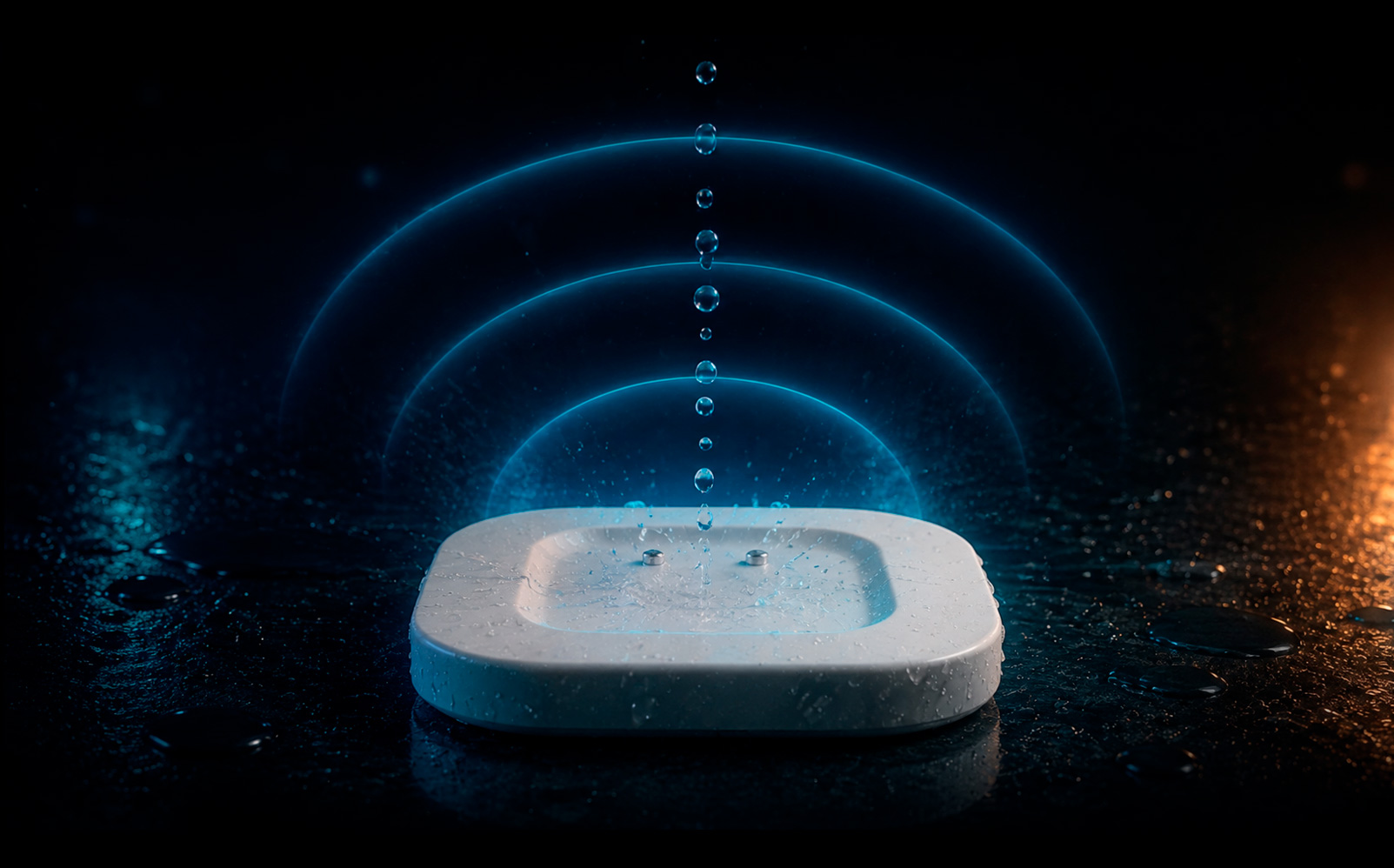
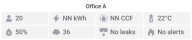
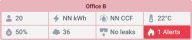
ROOMSYS detects leaks in real time and immediately alerts your concierge team—helping them locate the issue, act quickly, and prevent costly damage across the building.
See ROOMSYS in action