Why remote monitoring is becoming essential for modern self-storage facilities
The self-storage industry remains one of the more resilient segments in commercial real estate, but modern facilities are becoming far more technology-dependent than many investors initially expect. Remote management, automated access control, smart surveillance, and environmental monitoring reshape how storage properties operate. At the same time, many operators are discovering that automation alone does not guarantee operational control. A facility may have digital locks and online rentals, yet still suffer from major visibility gaps around security, HVAC performance, leaks, or environmental conditions. That is why remote monitoring is becoming a critical operational layer for modern self-storage facilities, providing continuous insights into site conditions, equipment behavior, and potential risks across a single location or an entire portfolio.
So, let's consider what new investors should know about buying self-storage now.
The operational reality of modern self-storage facilities
One of the biggest misconceptions about self-storage is that it operates as passive real estate. Storage facilities operate much closer to operational businesses than traditional investment properties do. Even facilities with remote leasing and automated gate access still require constant operational oversight because temperature fluctuations, unauthorized access attempts, water leaks, power failures, HVAC malfunctions, and security incidents can disrupt operations and directly affect revenue, tenant retention, and liability exposure. The problem becomes even greater for operators managing multiple locations or facilities spread across secondary and tertiary markets. However, remote management only works effectively when operators maintain reliable real-time visibility into what is happening at each site.
Without centralized monitoring, operators often rely on delayed reporting or reactive troubleshooting. Problems may remain unnoticed for hours or days:
- HVAC systems may fail in climate-controlled units;
- Water leaks may damage tenant property before detection;
- Unauthorized access events may go unnoticed overnight;
- Equipment failures may escalate into expensive repairs;
- Environmental conditions may drift outside safe ranges.
In traditional operating models, these problems were often discovered during physical walkthroughs or tenant complaints. Modern storage facilities increasingly require continuous operational awareness instead of periodic inspection cycles. This is especially important because many self-storage operators are seeking to reduce staffing overhead while managing more geographically dispersed facilities.
Why remote management alone is not enough
One of the more revealing observations from self-storage brokers in 2025 was that many new investors assume automation automatically creates passive income. But that assumption often breaks down quickly. Some operators implement remote management systems, expecting facilities to run almost autonomously, only to discover that automation without operational visibility creates new risks rather than removing them. A remotely managed property still requires continuous supervision, gates may malfunction, and climate systems may drift outside configured thresholds. Also, security systems generate false alarms, sensors fail, and tenants encounter access issues, and equipment performance degrades over time. Automation can streamline operations, but it cannot replace awareness.
This is where remote monitoring becomes fundamentally different from simple automation. Automation performs tasks. Monitoring verifies whether systems are functioning correctly and whether conditions remain within acceptable operational limits. That distinction is critical in self-storage environments because facilities contain a wide range of operational variables that directly affect tenant trust and asset value. For example, climate-controlled storage facilities depend heavily on stable environmental conditions. If HVAC systems fail during extreme temperatures, tenant property can be damaged long before operators physically visit the site. Likewise, unnoticed humidity issues may create mold risks, especially in regions with fluctuating seasonal conditions.
Modern access control systems generate enormous amounts of event data, but event logs alone do not provide operational awareness. Operators need centralized monitoring capable of identifying unusual activity patterns, unauthorized access attempts, or abnormal equipment behavior in real time. Remote monitoring effectively acts as the facility’s nervous system. It continuously checks whether operational systems are functioning as intended and alerts operators when conditions drift outside normal parameters.
The role of environmental monitoring in self-storage operations
Environmental monitoring is becoming one of the fastest-growing infrastructure priorities in self-storage, particularly for climate-controlled facilities. Historically, storage operators primarily focused on occupancy rates, security, and access management. Today, environmental stability plays a much larger role because tenants increasingly store temperature-sensitive and high-value items, including electronics, documents, artwork, inventory, medical supplies, and business equipment. Climate-controlled storage is no longer viewed as a premium niche feature. In many markets, it has become a competitive requirement.
The challenge is that environmental conditions inside storage facilities can fluctuate more aggressively than many operators realize. Large buildings often contain uneven airflow patterns, temperature gradients, and humidity variations across different sections of the property. HVAC systems may appear operational while certain zones drift outside acceptable ranges. Without continuous environmental monitoring, these problems may remain invisible until tenant complaints emerge.
Modern monitoring systems use distributed IoT sensors to track:
- Temperature;
- Humidity;
- Air quality;
- Water leaks;
- Power interruptions;
- HVAC performance anomalies.
This creates real-time operational visibility that manual inspections simply cannot provide consistently.
Humidity monitoring is particularly important because moisture problems often develop gradually and remain unnoticed for extended periods. Even small HVAC inefficiencies can create condensation risks that damage stored goods over time.
Water leak detection is another increasingly valuable capability. A minor plumbing issue or roof leak may initially affect only a small area, but if left undetected overnight or during weekends, it can quickly escalate into major tenant claims and repair costs.
Environmental monitoring also supports operational efficiency beyond risk prevention. Continuous data collection allows operators to identify inefficient HVAC runtime, detect thermal inconsistencies, and optimize energy usage across climate-controlled zones.
This matters because energy consumption has become a growing concern for storage operators, especially as financing costs and operating expenses remain elevated across commercial real estate sectors.
How IoT monitoring improves operational visibility across storage portfolios
Provided that storage operators expand into multiple markets, centralized operational visibility becomes increasingly difficult to maintain through manual oversight alone. This is where IoT-based monitoring platforms provide a major operational advantage. Instead of managing facilities as isolated sites, operators can monitor an entire portfolio through centralized dashboards that aggregate live data from sensors, access systems, HVAC infrastructure, and environmental controls.
The value of this approach is not simply convenience. It fundamentally changes how operators respond to operational risk. Rather than waiting for tenant complaints or periodic inspections, IoT monitoring enables facilities to operate on an exception-based management model. Operators focus on anomalies, alerts, and operational deviations rather than continuously checking every system manually.
For example, centralized monitoring platforms can immediately identify:
- Abnormal temperature fluctuations in climate-controlled units;
- Water leaks or moisture anomalies;
- Power outages affecting gates or surveillance systems;
- HVAC equipment operating outside expected parameters;
- Unusual access activity during non-standard hours.
This type of visibility becomes especially valuable in secondary and tertiary markets, where many investors are increasingly seeking opportunities due to lower competition from institutional buyers. Managing distributed facilities remotely creates operational scalability challenges. IoT monitoring reduces some of that complexity by consolidating operational intelligence into a single platform instead of relying entirely on local staff reporting. Another important advantage is historical data retention. Continuous monitoring creates long-term operational datasets that help operators identify recurring issues, seasonal environmental patterns, equipment degradation trends, and energy inefficiencies. Over time, this data becomes operationally strategic. It allows storage owners to move toward predictive maintenance and evidence-based facility optimization instead of relying solely on reactive troubleshooting.
How ROOMSYS supports smart self-storage monitoring
ROOMSYS smart building solutions provide IoT-based monitoring infrastructure to help self-storage operators maintain centralized operational visibility across their facilities. The platform combines wireless environmental sensors, smart alerts, centralized dashboards, and remote monitoring tools into a unified operational management system designed for modern commercial properties.
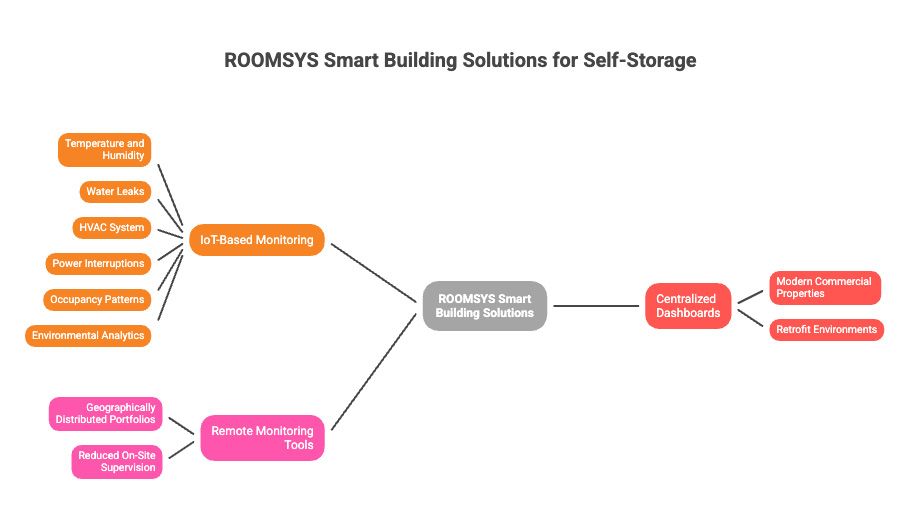
For self-storage facilities, ROOMSYS can support monitoring of:
- Temperature and humidity conditions;
- Water leaks and moisture risks;
- HVAC system behavior;
- Power interruptions;
- Occupancy and activity patterns;
- Facility-wide environmental analytics.
Because the platform uses a wireless IoT architecture and LoRaWAN connectivity, deployment is significantly easier in retrofit environments where installing new wiring would be expensive or disruptive. This is particularly valuable for storage operators modernizing older facilities while attempting to maintain uninterrupted operations. ROOMSYS also enables centralized monitoring across multiple sites through a single interface, helping operators maintain visibility across geographically distributed portfolios without relying entirely on constant on-site supervision.
Conclusion
The self-storage industry is becoming more technologically sophisticated, operationally distributed, and data-driven than many investors initially expect. Remote management may reduce staffing overhead and expand geographic investment opportunities, but it also increases the importance of maintaining continuous operational visibility. That visibility is where remote monitoring plays a critical role. Environmental sensors, IoT infrastructure, centralized dashboards, and automated alerting systems help operators identify problems before they escalate into tenant complaints, equipment failures, or revenue disruptions. More importantly, they enable facilities to operate proactively rather than reactively.
If you are looking to modernize self-storage operations with centralized IoT monitoring, environmental sensing, and real-time facility visibility, ROOMSYS self-storage facility monitoring solutions help operators gain better control over security, HVAC performance, environmental conditions, and multi-site operations through a unified platform.
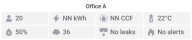
From the first drop to a faster response
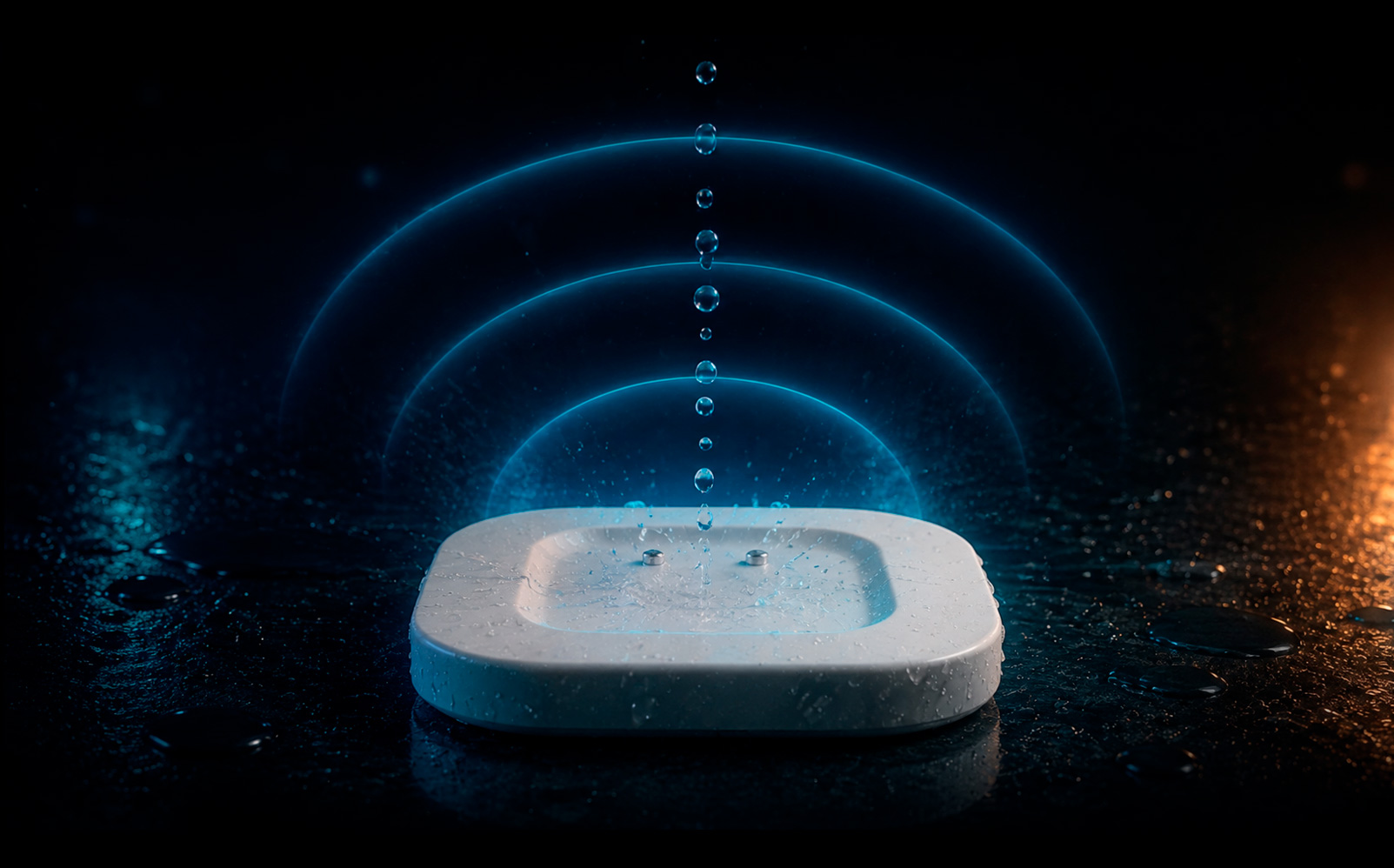
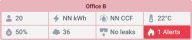
ROOMSYS detects leaks in real time and immediately alerts your concierge team—helping them locate the issue, act quickly, and prevent costly damage across the building.
See ROOMSYS in action