Why temperature monitoring is critical for restaurant food safety
How confident are you that every refrigerator, cold room, and prep station in your restaurant stays within safe temperature limits 24/7, not just when staff checks it? Food safety failures are rarely dramatic in the moment, but their consequences are. According to the Centers for Disease Control and Prevention, roughly 48 million people in the U.S. get sick from foodborne illnesses each year, with improper food handling and temperature control among the leading causes. In restaurant operations, temperature is the single most critical control factor. It determines whether food remains safe or becomes a risk within hours. Yet many kitchens still rely on manual checks and fragmented processes that leave long gaps between measurements.
Read on to see why restaurant temperature monitoring is no longer optional, how temperature failures actually happen in real operations, and what it takes to move from reactive checks to continuous, reliable control.
How temperature directly impacts food safety in restaurants
Temperature determines the rate at which bacteria grow in food. The widely recognized “danger zone”, between 5°C and 60°C (41°F to 140°F), allows rapid microbial growth. When food remains within this range, even for relatively short periods, contamination risk increases significantly. This applies across the entire food lifecycle: receiving, storage, preparation, holding, and service. Any break in temperature control at any stage introduces risk.
According to the U.S. Food and Drug Administration, improper holding temperatures are among the most frequently cited violations during restaurant inspections, based on FDA retail food risk factor studies. In practice, this means temperature control failures are not edge cases – they are routine operational issues across the industry. In restaurant environments, temperature deviations are not always obvious. A refrigeration unit can appear functional while slowly drifting outside safe thresholds. Similarly, hot holding equipment may fail to maintain consistent temperatures during peak service hours. These small deviations accumulate into real safety risks.
This is why restaurant food temperature monitoring must be continuous rather than periodic. Instead of relying on manual checks, operators increasingly adopt remote temperature monitoring systems that provide real-time visibility into every storage and preparation zone.
Where temperature control breaks down in restaurant operations
Temperature control issues in restaurants are rarely caused by a lack of awareness. They emerge from operational complexity – multiple storage points, constant equipment use, and reliance on manual routines in a fast-paced environment. Failures tend to concentrate around a few recurring patterns:
- Gradual equipment degradation that goes unnoticed until performance drops below safe thresholds;
- High-frequency usage during peak hours leading to unstable internal temperatures;
- Gaps in accountability when temperature checks are assigned but not verified;
- Lack of visibility across multiple refrigeration units and storage zones;
- Delayed response to deviations due to the absence of real-time alerts.
- The core problem is not the failure itself, but the delay in detection. In many kitchens, issues are discovered only after a scheduled check or when visible signs appear – both of which occur too late from a food safety perspective. This creates a structural blind spot. Between checks, temperature conditions remain unknown, even though risk continues to accumulate.
A cold room temperature monitoring system eliminates this uncertainty by providing continuous, real-time tracking across all storage environments. Instead of relying on periodic human input, operators gain immediate awareness of any deviation, regardless of when it occurs. This becomes critical in larger or multi-location operations. As the number of refrigeration points increases, so does the difficulty of maintaining consistent control through manual processes. Without centralized visibility, each unit effectively becomes an isolated risk. Commercial refrigeration monitoring systems address this by creating a unified control layer. They standardize how temperature is monitored, recorded, and managed across the entire operation – turning fragmented processes into a consistent, scalable system.
HACCP compliance and the real cost of temperature failures
Temperature monitoring is a required element of the HACCP (Hazard Analysis and Critical Control Points) framework. As a defined critical control point (CCP), it must be actively monitored, consistently recorded, and verifiable at any time. This means restaurants must maintain precise control over storage and holding conditions and be able to prove it. The challenge is not defining the rules – it is executing them reliably under real operational conditions. Traditional paper-based logs introduce friction into this process. They rely on staff consistency, are often completed retrospectively, and provide no real-time validation. As a result, they capture a version of compliance, but not necessarily the reality of what happens between checks.
Automated restaurant temperature monitoring changes this dynamic. Instead of periodic entries, it creates a continuous, time-stamped record of temperature data across all critical points. This data is stored centrally, making it immediately accessible during inspections and eliminating uncertainty around accuracy or completeness. However, compliance alone does not capture the full impact of temperature control failures.
When monitoring breaks down, the consequences extend quickly beyond regulatory issues:
- Loss of perishable inventory due to unnoticed deviations;
- Fines or penalties following failed inspections;
- Operational disruption, including temporary closure;
- Legal exposure in cases of foodborne illness;
- Long-term damage to customer trust and brand perception.
Food safety incidents can significantly reduce customer traffic, with recovery often taking months. In a review-driven environment, even a single incident can have a disproportionate impact on future revenue. From a risk management perspective, refrigeration monitoring is not just about meeting HACCP requirements. It acts as a control layer that protects both operational continuity and brand equity.
How ROOMSYS transforms restaurant temperature monitoring into continuous control
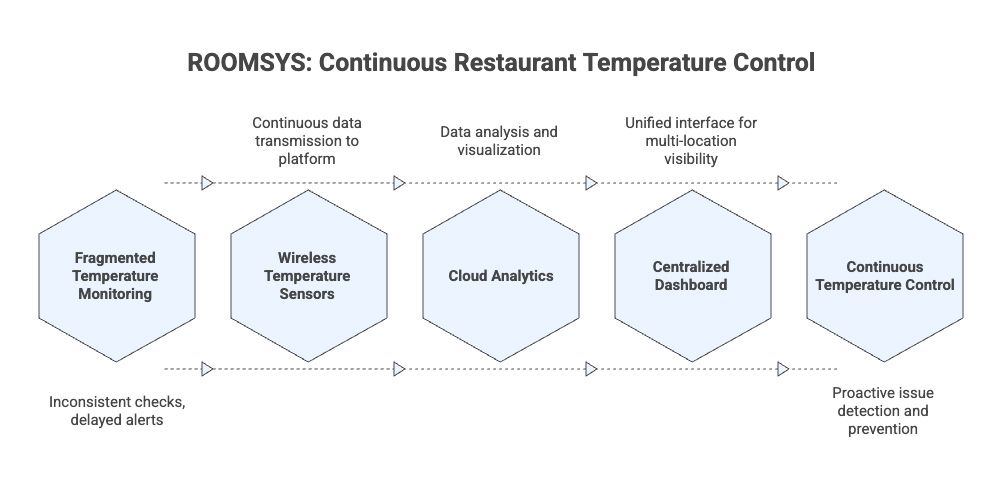
Automated remote temperature monitoring systems use sensors placed in refrigeration units, cold rooms, and storage areas. These sensors continuously transmit data to a centralized platform, where it is analyzed and visualized. When temperature thresholds are exceeded, alerts are triggered instantly, allowing staff to act before food safety is compromised.
This is where ROOMSYS provides a structured, scalable alternative. Our smart restaurant refrigeration monitoring solution combines wireless temperature sensors, cloud analytics, and a centralized dashboard to deliver continuous visibility across all refrigeration units. Instead of relying on fragmented checks, operators gain a unified interface for monitoring performance across one or multiple locations.
The core capabilities of our monitoring systems include:
- Continuous temperature tracking across all refrigeration and storage points;
- Instant alerts when thresholds are exceeded or abnormal patterns are detected;
- Centralized dashboards for multi-location visibility and control;
- Historical data logging for compliance, audits, and reporting;
- Early detection of equipment inefficiencies or gradual failures.
Beyond compliance, this approach provides operational intelligence. Temperature trends reveal patterns that are otherwise invisible – such as inconsistent cooling cycles, overloaded units, or early-stage equipment degradation. Addressing these issues proactively reduces downtime and prevents inventory loss. A properly implemented cold room temperature monitoring system also improves inventory stability by maintaining consistent storage conditions. At scale, commercial refrigeration monitoring systems standardize temperature control across locations, eliminating variability between sites and teams. Ultimately, the value lies in predictability. Instead of reacting to failures after they occur, restaurant operators can detect, respond, and prevent issues in real time – before they affect safety, compliance, or revenue.
Conclusion
Without consistent control, even well-managed kitchens are exposed to significant risk. By adopting automated restaurant food temperature monitoring, refrigeration monitoring, and scalable commercial refrigeration monitoring systems, restaurants can move from reactive compliance to proactive safety management. This delivers measurable benefits: reduced risk of foodborne illness, stronger compliance posture, lower operational losses, and improved brand trust. In a business where a single failure can have lasting consequences, temperature monitoring is not a secondary system – it is a foundational layer of modern restaurant operations.
If you’re looking to implement a reliable, scalable solution, ROOMSYS provides continuous monitoring, real-time alerts, and full visibility across all refrigeration units. Contact us to see how ROOMSYS can help you protect inventory, ensure compliance, and maintain consistent food safety standards across your operations.
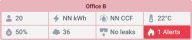
From the first drop to a faster response
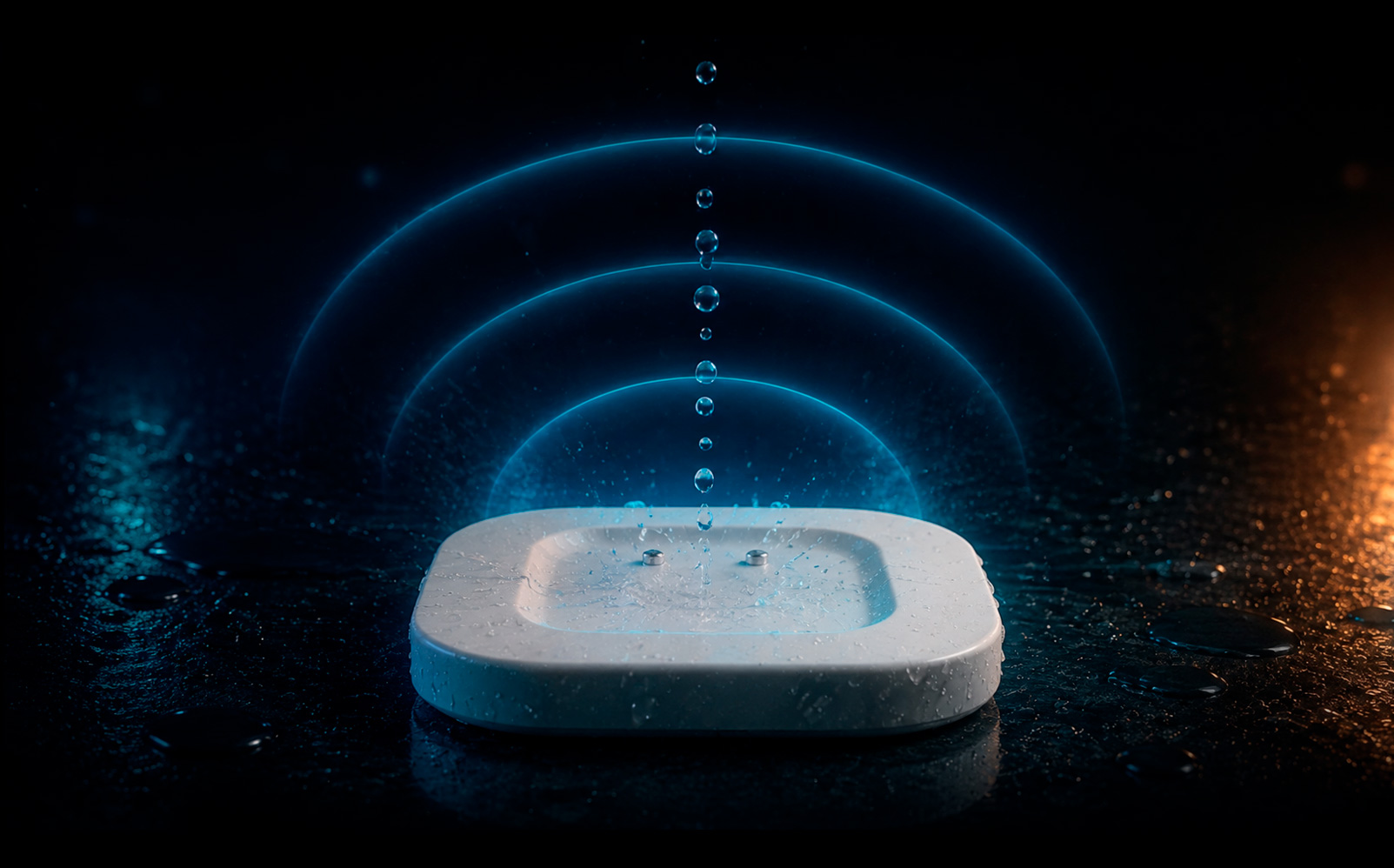
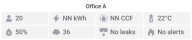
ROOMSYS detects leaks in real time and immediately alerts your concierge team—helping them locate the issue, act quickly, and prevent costly damage across the building.
See ROOMSYS in action