Four priorities for self-storage operators in a more competitive 2026 market
The self-storage industry entered 2026 with many of the same challenges it faced last year: housing activity remains below historical norms, competition continues to intensify in many markets, and operators are working harder to attract every new customer. While self-storage remains one of the more resilient real estate sectors, growth is no longer something operators can take for granted. The good news is that difficult markets often create opportunities for operators willing to adapt. The question for 2026 is not whether demand exists. The question is how effectively operators can capture it, convert it, and retain it. Here are four areas where self-storage businesses should focus their attention this year.
1. Stop managing reactively and start managing with real-time data
One of the biggest shifts happening across self-storage is the move from reactive management to data-driven operations. Historically, many operators relied heavily on monthly reports, occupancy snapshots, and instinct built through years of experience. While experience remains valuable, modern facilities generate far more information than can be processed manually. Occupancy trends, lead activity, website traffic, customer behavior, delinquency rates, marketing performance, access events, and environmental conditions all create valuable operational signals. The challenge is turning that information into actionable insight before problems emerge.
Operators that use centralized dashboards and business intelligence tools gain earlier visibility into changing trends. They can identify declining conversion rates before occupancy drops. They can spot pricing opportunities before revenue stagnates. They can recognize shifts in customer behavior before competitors do. This level of visibility becomes particularly important when market conditions remain uncertain. Facilities that understand what is happening in real time are often able to make adjustments faster than those relying solely on historical reporting. The competitive advantage increasingly belongs to operators who can answer not just what happened last month, but what is happening today.
You may be interested in: Why remote monitoring is becoming essential for modern self-storage facilities
2. Make customer convenience a competitive advantage
Self-storage customers have become increasingly accustomed to digital-first experiences. The modern renter expects convenience throughout the entire customer journey. They want to compare options online, reserve units from mobile devices, complete payments digitally, receive instant confirmations, and access information whenever they need it. This trend extends far beyond having a website.
The most successful operators are evaluating every customer interaction and looking for opportunities to remove friction. How easy is it to find pricing information? Can tenants complete rentals without speaking to staff? Is billing simple and transparent? Are support requests handled quickly? Facilities that make these processes easier often gain an advantage even when competing against larger operators. Customer expectations have also expanded beyond the rental process itself. Convenience now includes communication, account management, security, and facility access. A seamless customer experience creates stronger retention, better reviews, and more referrals.
3. Focus on retention, not just new move-ins
Many operators spend most of their attention on customer acquisition. While attracting new tenants remains essential, retention is becoming increasingly important as marketing costs continue to rise. A facility can maintain strong move-in numbers and still struggle financially if move-outs remain high. Retention starts with understanding why customers leave. Sometimes the reasons are outside an operator's control, such as relocations or life changes. However, many move-outs are influenced by pricing, service quality, communication, facility conditions, or customer experience. Operators should pay closer attention to the full customer lifecycle rather than focusing exclusively on occupancy growth.
Questions worth asking include:
- Which customer segments stay the longest?
- Which acquisition channels produce the highest-value tenants?
- What causes customers to leave?
- Are certain unit types associated with stronger retention?
- How do customer service interactions influence long-term satisfaction?
Data-driven answers to these questions often reveal opportunities that occupancy reports alone cannot identify. Retention also ties directly into revenue stability. Longer stays reduce acquisition costs, create more predictable cash flow, and improve overall facility performance.
4. Expand operational visibility beyond traditional management software
Facility management software remains the operational backbone of most self-storage businesses. However, many operators are beginning to realize that traditional management systems only tell part of the story. Occupancy, billing, and customer records are critical, but they do not provide visibility into everything happening across a facility. Environmental conditions, HVAC performance, water leaks, power interruptions, security events, and building infrastructure issues often exist outside the scope of conventional management platforms. Yet these factors can directly impact customer satisfaction, operating costs, and facility reputation. This is one reason IoT monitoring adoption continues to grow across commercial real estate and self-storage environments.
Modern monitoring systems provide operators with real-time visibility into facility conditions, helping identify issues before they become expensive problems. A small water leak can be detected before damaging customer belongings. HVAC issues can be identified before climate-controlled units fall outside acceptable conditions. Power disruptions can trigger alerts before they affect critical systems. The value is not simply operational awareness. It is the ability to act proactively rather than reactively.
How ROOMSYS supports smarter self-storage operations
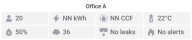
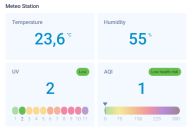
ROOMSYS smart self-storage monitoring solution helps self-storage operators improve operational visibility through centralized IoT monitoring, environmental sensing, and real-time facility analytics. The platform combines wireless sensors, automated alerts, centralized dashboards, and LoRaWAN connectivity to provide visibility into conditions that traditional facility management systems often do not track.
For self-storage facilities, ROOMSYS can help monitor:
- Temperature and humidity conditions;
- Water leaks and moisture risks;
- HVAC system performance;
- Power interruptions;
- Occupancy and activity patterns;
- Environmental conditions across multiple locations.
Because the platform is wireless, deployment is straightforward even in existing facilities where installing new infrastructure would be costly or disruptive. The result is greater operational awareness, faster response times, and more informed decision-making across self-storage portfolios.
You may be interested in: Self-storage in 2026: 10 trends operators should be watching
Conclusion
The self-storage industry may face many of the same macroeconomic challenges in 2026 that it encountered last year, but repeating the same operational approach is unlikely to produce different results. The operators most likely to succeed are focusing on factors they can control: improving customer experience, making smarter use of data, strengthening retention, and increasing operational visibility. These priorities do not require predicting market conditions perfectly. They require building a more agile and informed operation that can respond effectively regardless of what the market does next.
If you are looking to improve visibility across your facilities and make more proactive operational decisions, ROOMSYS smart monitoring solutions provide real-time environmental monitoring, centralized dashboards, and IoT-powered insights designed for modern self-storage operations.

From the first drop to a faster response
ROOMSYS detects leaks in real time and immediately alerts your concierge team—helping them locate the issue, act quickly, and prevent costly damage across the building.
See ROOMSYS in action